Monetizing Event-Based Buying Triggers in Business
Event-Based Buying Triggers in Business: Unlocking Opportunities for Growth
In today’s competitive marketplace, understanding event-based buying triggers in the business world can mean the difference between missing a sale and creating a lasting customer relationship. Successful companies do not wait for customers to find them. They look for important moments in their customers' lives or industries. Then, they respond with value, empathy, and good timing.
By identifying the events that lead to a buying decision, you can better assist your clients. These events can be a new product launch, a business expansion, or a personal milestone. Hi, I'm Ryan Zofay. As a skilled business coach, I help leaders understand buying signals. This builds trust, increases sales, and inspires loyalty over time.
I want to slow this down for a second—because this is where most people miss the money. They hear “trigger” and think “tactic.” I hear “trigger” and think: timing + relevance + emotional clarity. When a real event happens, people don’t just want information. They want certainty. They want a path. They want someone who understands what they’re dealing with and can move them forward.
In my coaching work, I teach this as a simple three-part lens:
-
Event: What changed in their world (internally or externally)?
-
Impact: What does that change create (risk, urgency, opportunity, pressure)?
-
Next Step: What’s the smallest high-value action you can guide them into right now?
If you can get good at those three, you stop chasing. You start showing up at the exact moment someone is ready to buy, ready to commit, ready to decide.
Mini-Checklist: “Do I have a real trigger?”
-
Is there a specific change, deadline, milestone, or disruption involved?
-
Does it create measurable pain or measurable upside within 30–90 days?
-
Can I explain the benefit of acting now in one sentence?
-
Do I have a clear next step that feels safe and simple for them?
Quick takeaway: A trigger is not hype. A trigger is a real-world change that makes the buyer’s “later” turn into “now.”

Why Event-Based Buying Triggers Matter
Every business is driven by human decisions. And behind each decision is often an event:
-
A company hits rapid growth and suddenly needs more resources.
-
An individual experiences a major life change and starts searching for solutions.
-
A market disruption forces businesses to adapt quickly.
By aligning your business strategies with these event-based buying triggers, you are not just selling. You are helping clients when they need you the most.
For entrepreneurs and leaders, I teach how to recognize these triggers, position your message, and deliver with authenticity.
Here’s the real reason triggers matter: they compress decision cycles. People who were “interested” become “committed” when the environment forces clarity. That’s why speed and timing are not optional. In sales research, responding fast is consistently tied to better outcomes—some analyses report leads contacted within an hour are far more likely to become qualified than those contacted later, and contacting within minutes can dramatically increase qualification likelihood.
And in modern B2B, triggers matter even more because decision-making is rarely one person. Buying groups commonly include multiple stakeholders (often in the 6–10 range). That means you’re not just aligning with one person’s urgency—you’re helping a whole group agree that now is the right time.
What triggers look like in the real world (examples I coach on):
-
Growth trigger: “We just hired 20 people” → onboarding, tools, process, training, support capacity.
-
Risk trigger: “We failed an audit / had a security incident” → compliance, controls, vendor changes.
-
Revenue trigger: “Pipeline dropped / churn spiked” → new acquisition channels, retention systems, messaging refresh.
-
Leadership trigger: “New VP/CRO/CMO” → new priorities, new vendors, quick wins needed.
-
Market trigger: “Competitor launched / pricing shifted” → differentiation, repositioning, offer upgrades.
Exercise: Build a Trigger Map (10 minutes)
-
Step 1: Write down 10 events your ideal customer might face this quarter (hiring, funding, churn, expansion, compliance, platform change, etc.).
-
Step 2: For each event, write the top 2 pains and top 2 desired outcomes it creates.
-
Step 3: Write one “bridge sentence” that connects the event to your offer (no hype, just logic).
-
Step 4: Write one safe next step: audit, assessment, quick plan, sample, or short call.
Script: The “Event → Impact → Next Step” opener
-
Version A (short): “I saw you’re [event]. That usually creates [impact]. If you want, I can share a quick 3-step plan to handle it without burning time or budget.”
-
Version B (more consultative): “When teams hit [event], I usually see one of two problems show up: [problem 1] or [problem 2]. Which one feels closer to what you’re dealing with?”
-
Version C (stakeholder-friendly): “If you’re aligning multiple people on this, I can send a one-page decision brief: options, tradeoffs, and what to measure in the first 30 days.”
Mini-Checklist: Trigger Qualification (use this before outreach)
-
Is the event confirmed (public signal, internal signal, or direct statement)?
-
Do I know what success looks like to them in 30–90 days?
-
Do I have proof/logic for why acting now is safer than waiting?
-
Is my next step simple enough that they can say yes fast?
Business Tip: Account for event-based buying triggers as part of your business strategy. Build a short “trigger list” for your ideal customer, track the signals weekly, and show up with one clear next step when the timing is right.
End-of-section takeaway (expanded): The best companies don’t “sell harder.” They listen better. Triggers help you show up with relevance, not pressure—so your outreach feels like help, not a pitch.
The Power of Motivational Speeches in Business
Words have the power to change lives, spark new ideas, and ignite action. That’s why inspirational motivational speeches are a cornerstone of my leadership training.
A great motivational speech doesn’t just encourage—it empowers. It reminds business owners, leaders, and teams that no challenge is insurmountable and no dream is too big. When combined with insights like buying triggers, motivational speeches give the emotional boost that turns strategies into success stories.
Let me make this practical. In business, motivation isn’t a “nice-to-have.” Motivation is energy. Energy is consistency. And consistency is what makes execution real.
When a trigger hits (growth, disruption, crisis, opportunity), teams either tighten up and perform—or they scatter. The leader’s job is to bring people back to focus with language that creates certainty, direction, and ownership.
Science-backed reality: Timing + personalization can materially impact performance. Marketing research often finds that personalization and relevance can drive meaningful revenue lifts in certain sectors when executed well—because people respond to messages that feel tailored to what they’re experiencing right now.
My 60-second “Trigger Huddle” (use this with teams)
-
1 sentence on the event: “Here’s what changed: ______.”
-
1 sentence on the impact: “Here’s what it means if we respond well: ______.”
-
1 sentence on the priority: “Today we focus on: ______.”
-
1 sentence on ownership: “You own this: ______. I own that: ______.”
-
1 sentence on belief: “We’ve handled harder—execute the plan.”
Exercise: Write a 90-second motivational micro-speech (template)
-
Hook (10 sec): “Right now, most people will _____. We’re not most people.”
-
Truth (20 sec): “Here’s what’s real about the situation: _____. No excuses.”
-
Meaning (20 sec): “If we do this right, we gain _____. If we avoid it, we lose _____.”
-
Plan (30 sec): “This is the plan: step 1 ____, step 2 ____, step 3 ____.”
-
Call-up (10 sec): “Execute. Communicate. Improve. Let’s go.”
Script: Motivational close that doesn’t feel cheesy
-
“I’m not asking you for perfection. I’m asking you for professionalism. Show up, do your part, and we’ll adjust fast. That’s how winners operate.”
-
“Confidence doesn’t come first—evidence comes first. Stack small wins today.”
Mini-Checklist: What a great motivational speech does
-
Names the truth (no sugarcoating).
-
Connects effort to outcome (clear cause/effect).
-
Gives a simple plan (people fear confusion more than hard work).
-
Creates ownership (who does what by when).
-
Ends with action (not vibes).
End-of-section takeaway (expanded): Motivation isn’t noise—it’s alignment. When the message matches the moment, teams move faster, customers feel the certainty, and triggers turn into growth.
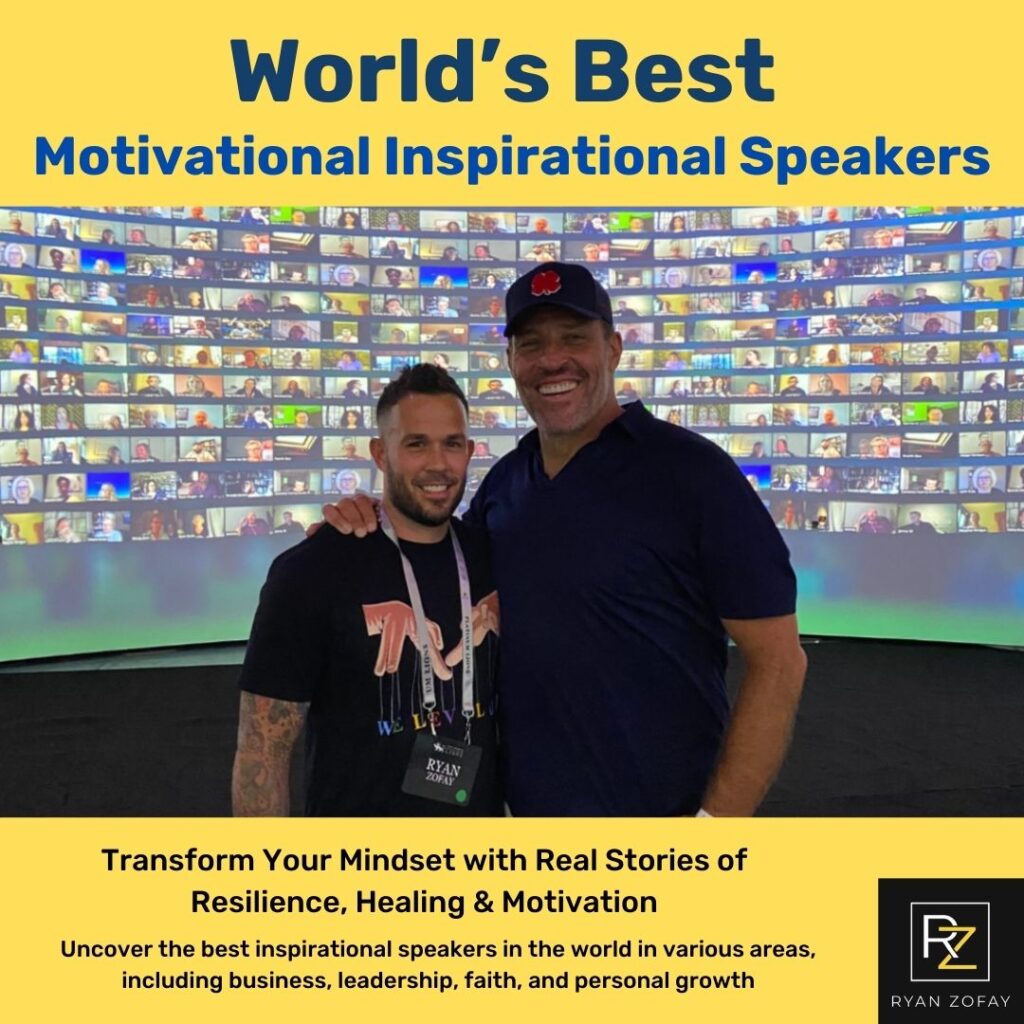
Living the Quote: Be the Change You Want to See in the World
At the heart of my message is a call to action: be the change you want to see in the world.
In business, this philosophy means modeling integrity, resilience, and innovation. Leaders can demonstrate the values they wish to share within their industries, organizations, and communities. They should not wait for opportunities or trends.Remember: You’re Stronger Than You Think
Challenges in business can feel overwhelming. But Ryan Zofay constantly reminds his clients that you’re stronger than you think.
Resilience is often the key to success. It helps when times are uncertain, when taking on a leadership role, or when creating a vision from the ground up. Strength doesn’t just come from winning; it comes from persevering, learning, and continuing to show up.
Here’s what I mean by “be the change” in the context of triggers: you don’t wait for perfect conditions. You build the habits that make you dangerous in any condition.
My Resilience Drill (5 minutes, daily):
-
Step 1: Write the current pressure in one sentence: “Right now, ______.”
-
Step 2: Write the truth in one sentence (no drama): “The facts are ______.”
-
Step 3: Write the next controllable action: “The next move is ______.”
-
Step 4: Write the standard you’ll keep: “No matter what, I will ______.”
Exercise: Turn a trigger into leadership
-
Pick one event happening in your business right now (missed numbers, new hire wave, competitor move, internal churn, market shift).
-
Define the lesson you want your team to learn from it (speed, quality, discipline, communication, resilience).
-
Create one visible behavior you will model this week that proves the lesson is real.
Script: “Calm leadership” message to your team when pressure hits
-
“We’re not ignoring reality. We’re organizing reality. Here’s the situation, here’s the plan, here’s who owns what. Execute today. We’ll review and improve tomorrow.”
Mini-Checklist: Strength in action (not in theory)
-
I tell the truth fast.
-
I choose one priority, not ten.
-
I move with urgency, not anxiety.
-
I measure what matters and adjust quickly.
-
I lead the standard before I demand it.
End-of-section takeaway (expanded): Triggers don’t just create buying moments—they create leadership moments. If you can stay disciplined when things change, you become the person people trust to guide the next move.

Related Helpful Resources
For deeper insights into leadership, business growth, and personal development, explore these resources:
Before you click anything, I want you to do one thing: take the frameworks you just learned and apply them to your business for the next seven days. Most people read and forget. Winners read and execute.
7-Day Trigger Implementation Plan (fast and practical)
-
Day 1: Identify 10 triggers your market is experiencing right now.
-
Day 2: Write your “Event → Impact → Next Step” opener for your top 3 triggers.
-
Day 3: Build a simple trigger score (1–5) for urgency, fit, budget likelihood, stakeholder complexity.
-
Day 4: Create a one-page decision brief you can send after first contact (options + tradeoffs + 30-day metrics).
-
Day 5: Run a team huddle using the “Trigger Huddle” script.
-
Day 6: Outreach to 10 prospects with a trigger-specific message (no hype, just relevance).
-
Day 7: Review responses, refine messaging, repeat with better targeting.
Mini-Checklist: Lower-friction follow-up (what I teach)
-
Follow up with value (a framework, a checklist, a decision brief).
-
Ask one clear question (not five).
-
Offer two simple next steps (pick A or B).
-
Make it easy to say “not now” (you’ll get more honesty and better timing).
-
Event-Based Buying Triggers Business
-
Best Motivational Speeches
-
Be the Change You Want to See in the World
-
You’re Stronger Than You Think
End-of-section takeaway (expanded): Don’t collect information—collect results. One trigger framework applied consistently will outperform ten random tactics used occasionally.
Who Is Ryan Zofay?
Ryan Zofay is a successful entrepreneur, business coach, and transformational leader who specializes in turning adversity into opportunity. With years of hands-on experience building businesses and empowering individuals, Ryan helps leaders uncover hidden strengths, recognize growth opportunities, and lead with authenticity. His approach combines business strategy with personal growth. This makes him a popular mentor for people who want to succeed in life and business.
Here’s how I think about my role: I’m not here to hype you up for a day. I’m here to help you build systems that keep you winning when motivation fades. That’s why I love event-based buying triggers—it’s a system. It’s not dependent on luck. It’s dependent on awareness, timing, and execution.
What my coaching focuses on (real-world, not theory):
-
Clarity: Knowing what matters, what to ignore, and what to measure.
-
Conviction: Leading yourself first, so your team and customers trust your direction.
-
Communication: Saying the truth in a way people can actually act on.
-
Consistency: Daily actions that compound into confidence and revenue.
My “30-Day Momentum” framework (simple enough to execute)
-
Week 1: Build your trigger map and tighten your message (relevance first).
-
Week 2: Improve speed and follow-up structure (process over mood).
-
Week 3: Build stakeholder tools (decision briefs, ROI logic, clear next steps).
-
Week 4: Review results, refine targeting, scale what works.
Final takeaway (expanded): If you want more sales, don’t just talk louder. Talk more relevant. The moment you learn to connect real-world events to clear solutions—without pressure—you stop “selling” and start leading.


Comments
Post a Comment